From patriarch Laurens to the surgeons of Weesp
The complete line of descent from R.M. Verniers's family dossier, from Laurens Verniers to around 1900, generation by generation. →
This family tree is far from finished. I have had to make choices and focused first on the line that leads to Weesp: from progenitor Laurens Verniers to the surgeons and administrators there. I have gathered information on many more family members; I will add them in the coming months and work them out in new stories.
Around 1600 a second Verniers family also fled from Antwerp to Amsterdam: that of Joris Verniers and Maeijken De Windt, with their children and grandchildren. A family tie with this line has not (yet) been demonstrated. Their own family tree is in Story #15 — Joris Verniers: a second Antwerp family in Amsterdam.
Since October 2026 the family tree continues to around 1900, supplemented with the 1984 family dossier compiled by R.M. Verniers. Cards with a plain silhouette are people from that dossier. The complete genealogy from the dossier, up to around 1900, has a page of its own: The Verniers genealogy (1984).
Click on a card for that person's biography. Cards with a dotted border are not yet certain and are still being verified.
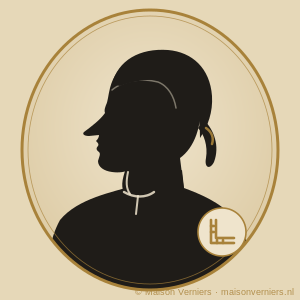
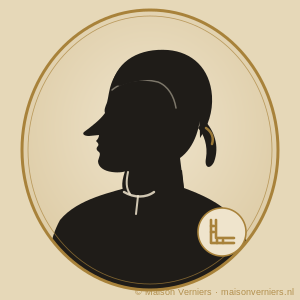
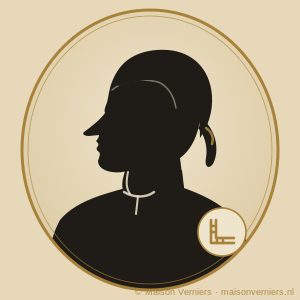
No portraits exist of these family members. The images on the cards are illustrative: sixteenth- to eighteenth-century portraits (public domain, via Wikimedia Commons, and a few own photographs from the Rijksmuseum) that fit the clothing and period of the person in question — they are therefore not actual images of these ancestors. For the eighteenth century, portraits from that period have been chosen. For the family members of the nineteenth and twentieth centuries, own silhouettes have been drawn, in the style of the cut-paper profile portraits that were popular with ordinary families at the time, with the dress of the period and a small sign of the person's trade.
↓ Download this family tree as a GEDCOM file
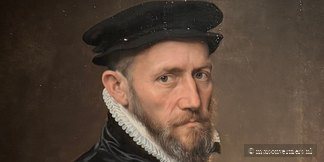
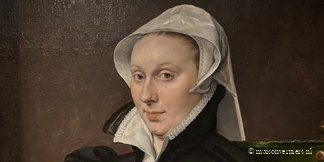
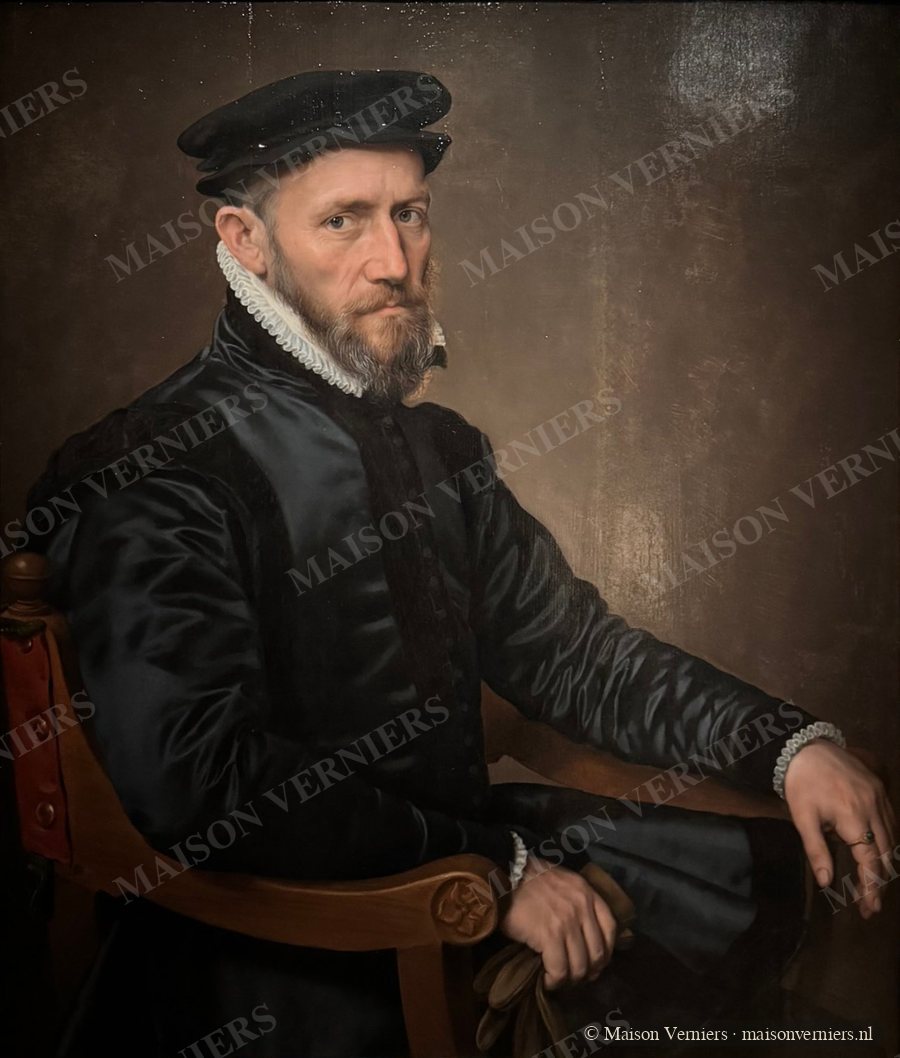
Ter illustratie: Anthonis Mor, Portret van Sir Thomas Gresham, ca. 1560–1565. De protestantse Sir Thomas Gresham (1519–1579) was de belangrijkste Engelse koopman in Antwerpen en financieel agent van de Engelse kroon in de Nederlanden; het is géén portret van Laurens Verniers. Rijksmuseum Amsterdam (SK-A-3118); eigen foto.
Probable father: Joost Joest Josse Verniers (uncertain). Children from an earlier marriage: Abraham, Pieter, Trijntje. Grietge Joosten was his second or third wife; from her first marriage to Jan she brought the stepchildren Giert(e) Jans and Jannetgen Jansdr — recorded in the 1625 will of Giert(e) Jans, in which Laurens is explicitly named as her stepfather and his son Pieter Verniers is granted an annual annuity.
Family ties have been demonstrated with the Anslo family and with Weesp; possible but unproven connections exist with the painter Rembrandt and the poet Vondel. Laurens lived and traded from "De Oranjeboom" on the Warmoesstraat/corner of the Oudezijds Kerkstraat, until he sold this house on 3 April 1591 to Gerrit Rijckelsma; before that he had also owned a house on the Kalverstraat (1585). On 30 June 1587 a "Lourens Jansz [..]vermers" bought a house and plot at the same spot on the Warmoesstraat (Source 263); this is presumably Laurens buying De Oranjeboom. That would mean his father was called Jan, which has not yet been confirmed by other sources. On 8 May 1592 he bought "De Witte Voet" on the Oudezijds Voorburgwal, where he lived until his death. He was buried on 27 December 1600 in the Oude Kerk, on the Oudezijds Voorburgwal near the Varkensluis.
Read the full story →
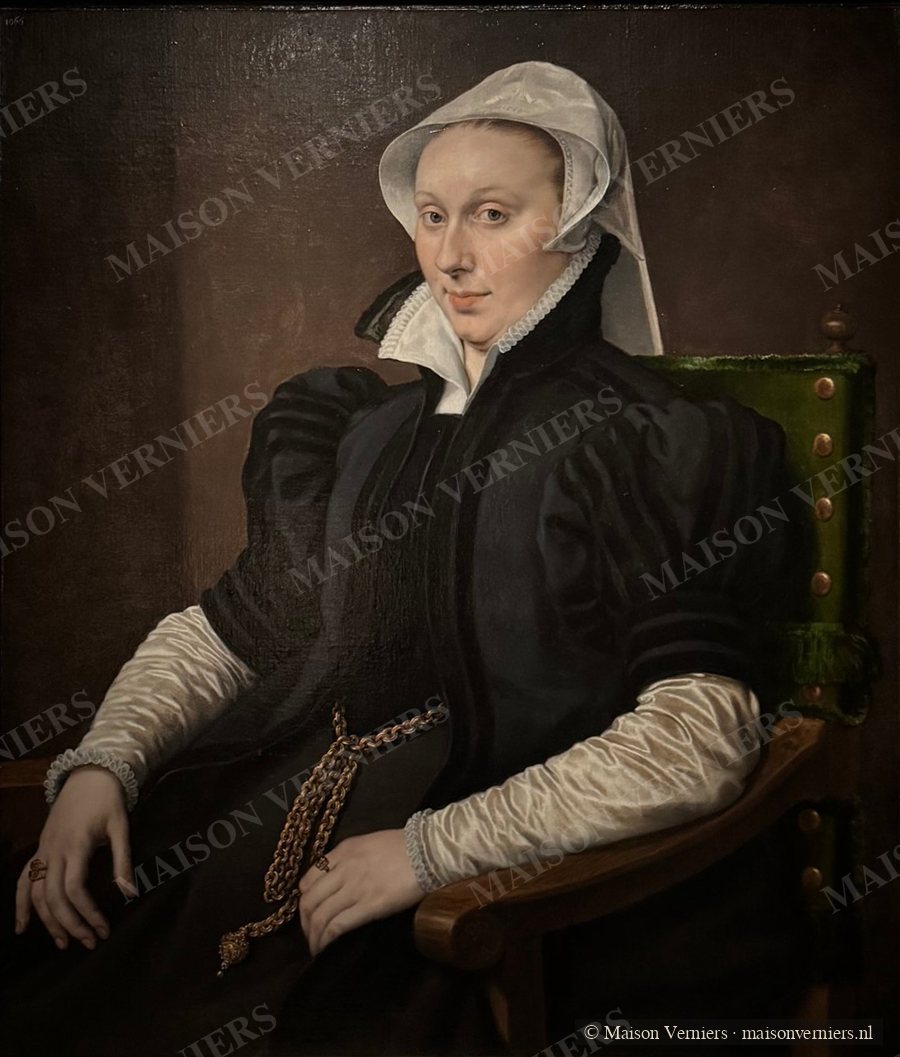
Ter illustratie: Anthonis Mor, Portret van Anne Fernely, ca. 1560–1565, de vrouw van Sir Thomas Gresham; het is géén portret van Grietge Joosten. Rijksmuseum Amsterdam (SK-A-3119); eigen foto.
Read about the sale of De Witte Voet → · Read the 1625 will →


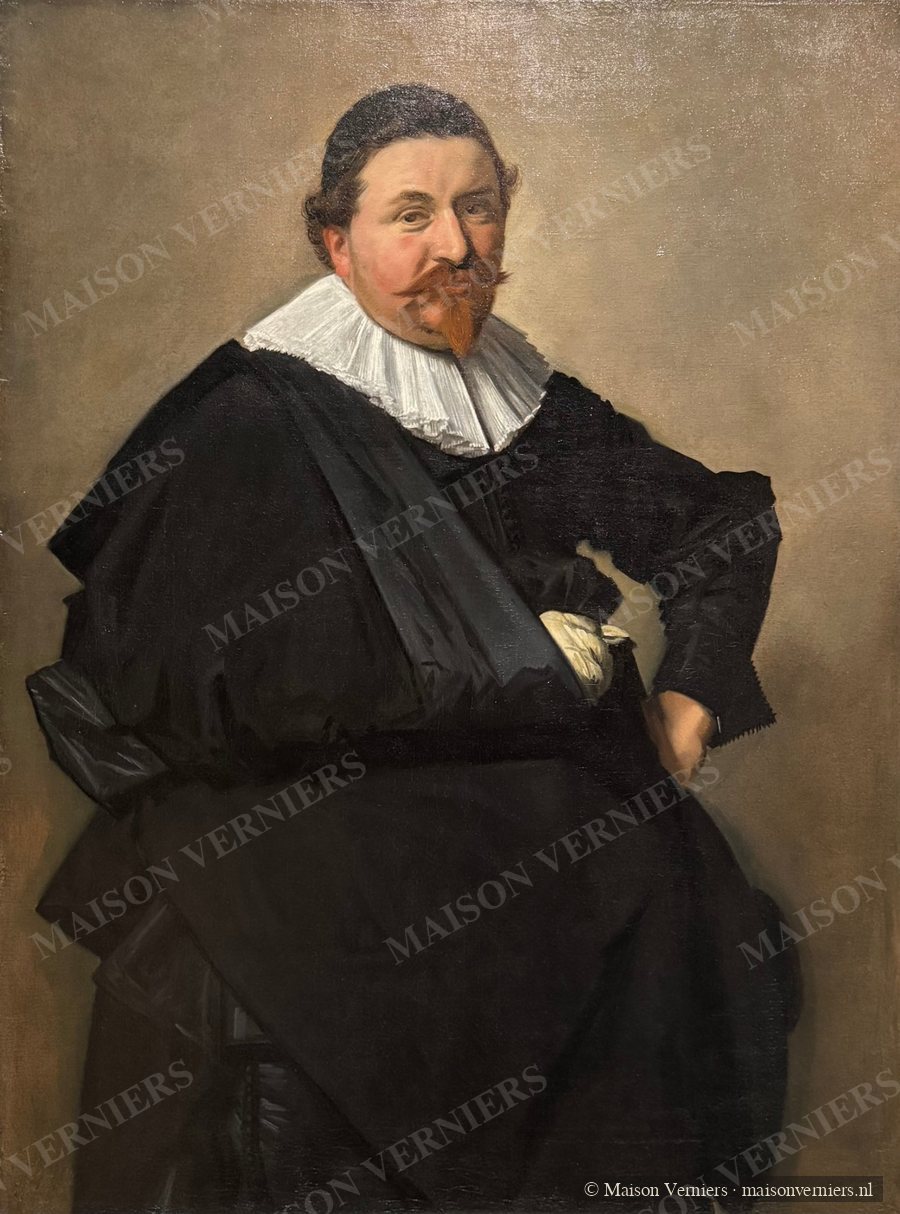
Ter illustratie: Frans Hals, Portret van Lucas de Clercq, ca. 1635. Lucas de Clercq was een welvarende linnen- en potaskoopman uit Haarlem; het is géén portret van Lourens Verniers. Rijksmuseum Amsterdam (SK-C-556); eigen foto.
The deed itself, in the spelling of the time:
Op huyden den tienden april anno xvic drie ende twintich compareerde voor mij Palm Mathijsz, openbaer notaris tot Amstelredam residerende, bij den Hove van Hollandt op nominatie der voorsz. Stede geadmitteert, ter presentie vande ondergeschreven getuygen, Saertgen Stevens, wed[uw]e van Lourens Verniers, soo voor haerselfs als mede als moeder ende voochdesse van haer kinderen, ende verclaerde in dier qualite te repudieren ende mette voet te strijcken den boedel ende goederen die haer man s[aliger] g[edachtenisse] metter doot ontruympt ende naegelaten heeft, sonder haer selven, voor haer oft haere kinderen, haer erffgenaem daerinne te willen dragen; protesterende daerover wel expresselijck mits desen, latende deselve tot profijt vande crediteuren die daertoe meenen gerechticht te sijn; versoeckende aen mij notaris hiervan gemaeckt te werden acte, ende tselve de crediteuren geïnsinueert te werden. Gedaen binnen der voorsz. Stede ten woonhuyse mijns notaris, ter presentie van Cornelis Henricz ende Werner Rutgersz, backer, als getuygen.
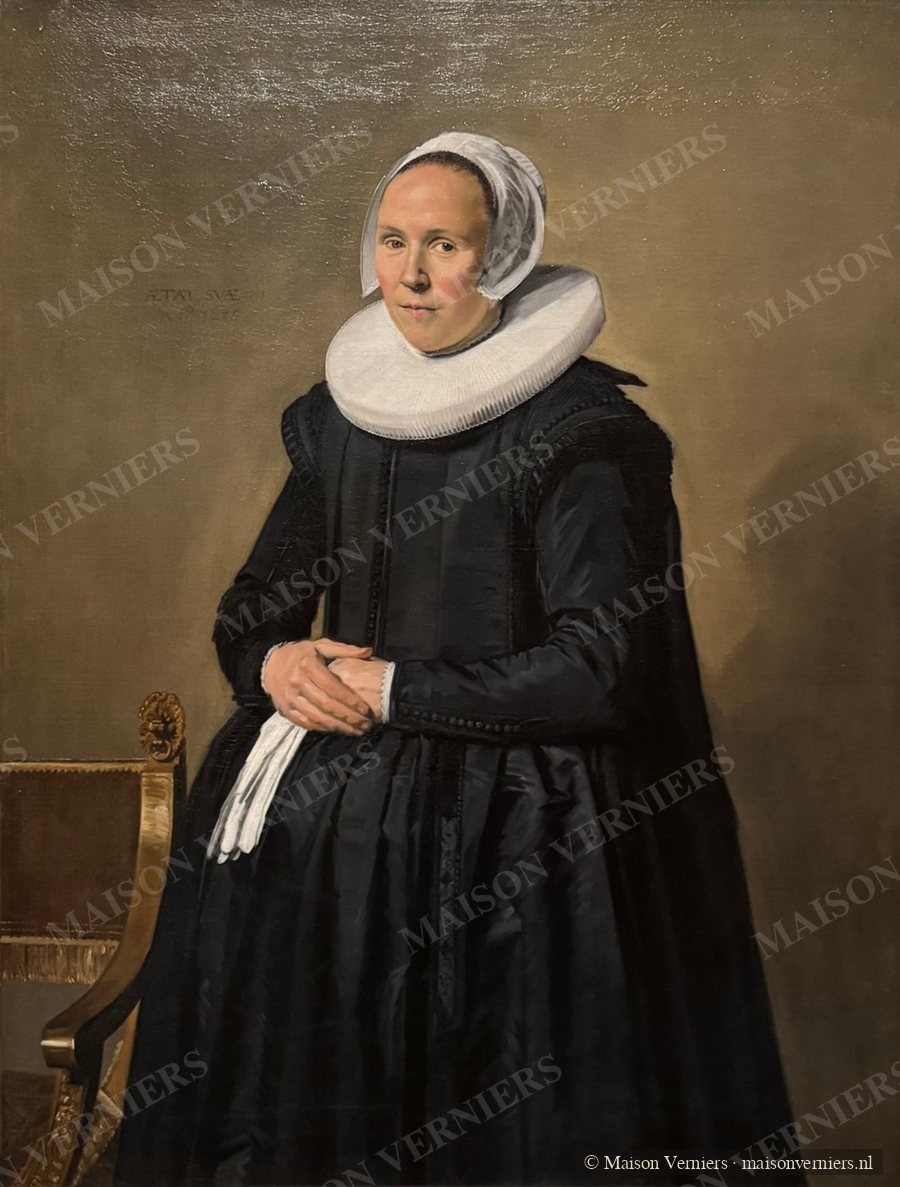
Ter illustratie: Frans Hals, Portret van Feyntje van Steenkiste, ca. 1635, de vrouw van Lucas de Clercq; het is géén portret van Sara Stevens. Rijksmuseum Amsterdam (SK-C-557); eigen foto.
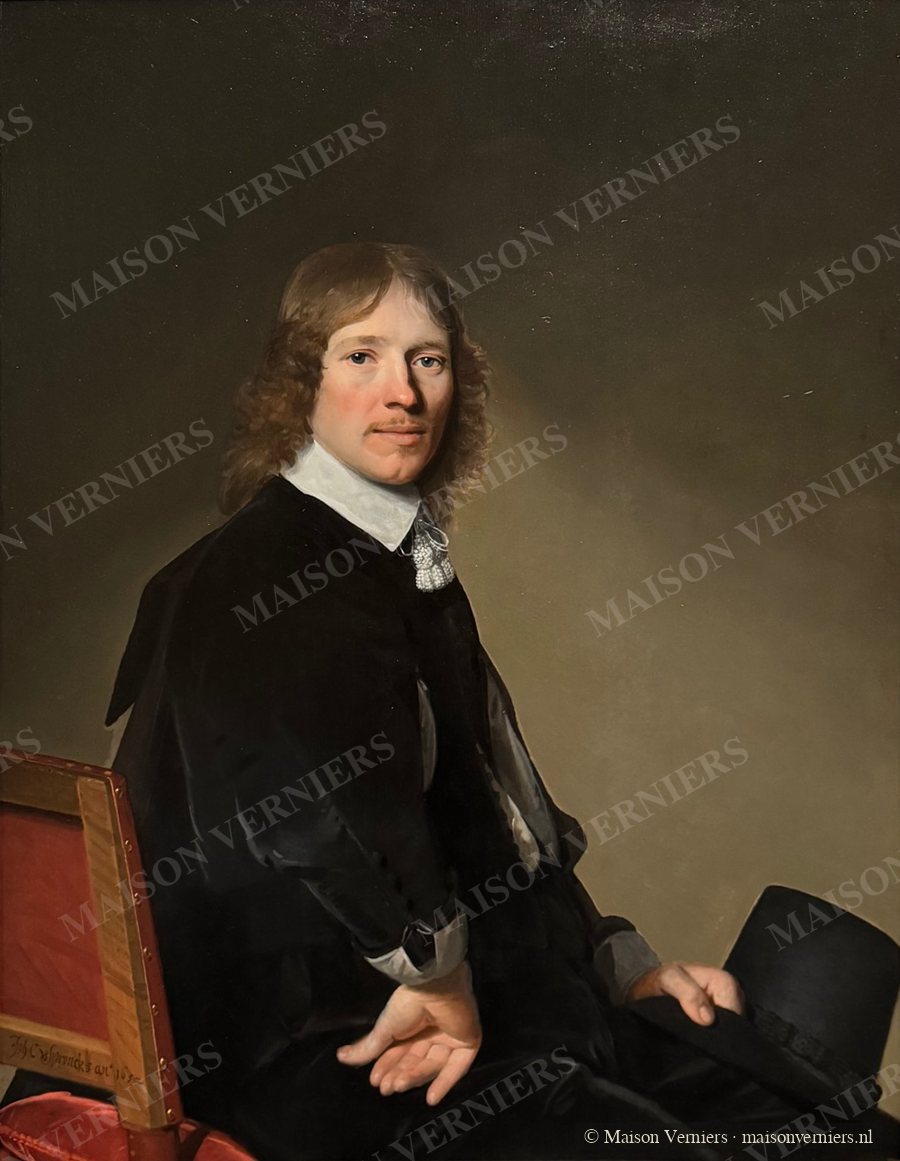
Ter illustratie: Johannes Cornelisz. Verspronck, Portret van Eduard Wallis, 1652. Eduard Wallis was een succesvolle lakenkoper (textielhandelaar) uit Haarlem; het is géén portret van Pieter Lourens Verniers. Rijksmuseum Amsterdam (SK-A-4999); eigen foto.
Read the full story of the family in Weesp →
From the 1984 family dossier: Here he is called Pieter Laurens Verniers. He became a burgher of Weesp on 13 May 1640, was a surgeon, alderman and regent of the orphanage there, and in 1657 was assessed as a "halve capitalist" (half capitalist) on the Hoogstraat. The dossier places his death between 1662 and 1665, probably in Weesp. That is earlier than the year of death 1673 given above; this difference is still being looked into. The dossier names five sons: Laurens, Dirk, Claes, Pieter and Cornelis. (Source 174)
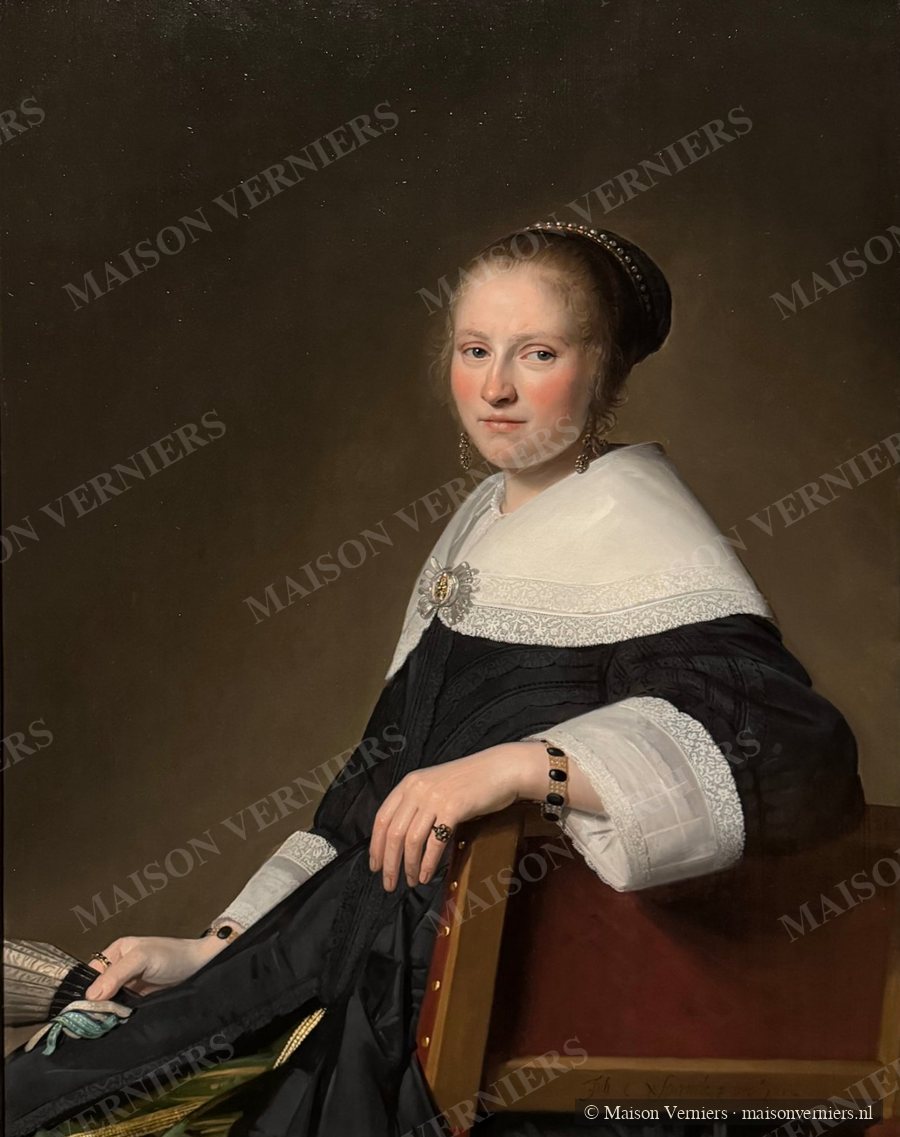
Ter illustratie: Johannes Cornelisz. Verspronck, Portret van Maria van Strijp, 1652, de vrouw van Eduard Wallis; het is géén portret van Marretje Dircksdr. Rijksmuseum Amsterdam (SK-A-5000); eigen foto.
From the 1984 family dossier: Written here as Marretje Dirksdr. She married Pieter Laurens Verniers in Amsterdam between 1646 and 1650. In 1665 she was herself recorded as a "halve capitaliste", on 17 December 1672 she made her will in Weesp, and she died before February 1673. (Source 174)
Her will is dated 23 November 1672, not 17 December: the latter date is in the margin, as the day a copy was issued. She left her sons Claes and Pieter the shop with its scales and equipment, her youngest son Cornelis a hundred guilders, four silver spoons and a gold piece with the likeness of Queen Elizabeth of England; Lourens, Claes, Pieter and Cornelis were her heirs. She signed with a cross. (Source 281) Read more →


The betrothal deed itself, in the spelling of the time (shown here in the original Dutch, as a primary source):
Op huyden so compareerde voor de ondergeschreven commissarissen van de huwelijckse saecken, Claes Pieterszoon, jongman van Weesp, Verniers, tusschen de vijf en twintig jaren oud, geassisteerd met zijn broeder Pieter Verniers, dewelcke zeide, gelijck ook op rapport van de bode gebleken is, last te hebben van zijn moeder ter eenre, ende de eerbare Geurtje Huijgen, jongedochter mede van Weesp, oud ontrent 27 jaren, geassisteerd met haar oudste zuster Hilletje Huijgen, ende versoecken haar drie huwelijcke proclamatiën in de kercke alhier, hetwelck geconsenteerd is.
Actum Weesp, desen 24 september 1672.
Claes Pietersen Verniers · Geurtjen Huijgen · Pieter Pietersen Verniers · geteeckent bij (merk van) Hillitje Huygen
From the 1984 family dossier: In 1680 Claes was a skipper. The dossier names six children: Marretje (bap. 8 Jan. 1673, died young), Pieter (bap. 4 Apr. 1674), Laurens (bap. 11 Dec. 1675, died young), Louwerens (bap. 4 July 1677, died young), Laurens (bap. 8 July 1682, through whom the line continues) and Marritje (bap. 1 Dec. 1684). That the name Laurens was given three times shows how much the parents wanted the grandfather's name to live on. (Source 174)
Under his mother's will (23 November 1672) he and his brother Pieter received the family shop (Source 281). On 2 February 1673 he and Geurtje Huygen made a joint will, which both signed themselves (Source 282).
On 2 March 1674 Claes and Guurtje made a new will, in which children are mentioned; Claes now signed in a steady hand (Source 305).
On 2 February 1673 she and Claes Verniers made a joint will, which she signed herself as "Geurtjen Huijgen" (Source 282).
On 2 March 1674 she and Claes made a new will (Source 305). Who her father was has not yet been proven; the deeds of the notary Van Leyden suggest Hendrick Huygen (born around 1605) and Huyg Pietersz (died before 1670, father of an Annitje Huygen) as possibilities. Read more →


Illustration: a silhouette in the dress of the period, with a carpenter's square as a sign of the trade (carpenter). It is not a portrait of Jan Verniers. Own drawing, Maison Verniers.
Illustration: a silhouette in the dress of the period. It is not a portrait of Margaretha Fecke. Own drawing, Maison Verniers.
Illustration: a silhouette in the dress of the period, with a trowel as a sign of the trade (bricklayer). It is not a portrait of Jan Verniers. Own drawing, Maison Verniers.
Illustration: a silhouette in the dress of the period. It is not a portrait of Anna Catharina Alida Peeters. Own drawing, Maison Verniers.
Illustration: a silhouette in the dress of the period, with a piece of metal type as a sign of the trade (typesetter). It is not a portrait of Jan Matthijs Verniers. Own drawing, Maison Verniers.
Illustration: a silhouette in the dress of the period. It is not a portrait of Anna Maria Westman. Own drawing, Maison Verniers.
Illustration: a silhouette in the dress of the period, with a stamp as a sign of the trade (stamp manufacturer). It is not a portrait of Jan Matthijs Verniers. Own drawing, Maison Verniers.
Illustration: a silhouette in the dress of the period. It is not a portrait of Johanna Wilhelmina Lindeman. Own drawing, Maison Verniers.


Illustration: a silhouette in the dress of the period, with a star as a sign of the trade (senior police officer). It is not a portrait of Willem Frederik George Lodewijk Verniers. Own drawing, Maison Verniers.
Illustration: a silhouette in the dress of the period. It is not a portrait of Jaantje Christina Visscher. Own drawing, Maison Verniers.

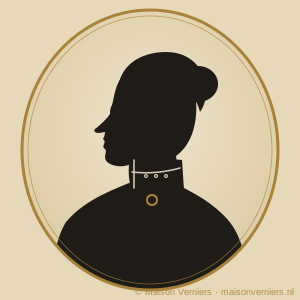
Illustration: a silhouette in the dress of the period, with a post horn as a sign of the trade (postman). It is not a portrait of Willem Frederik Verniers. Own drawing, Maison Verniers.
Illustration: a silhouette in the dress of the period. It is not a portrait of Johanna Catharina Ohlen. Own drawing, Maison Verniers.

Illustration: a silhouette in the dress of the period, with a shoe as a sign of the trade (shoemaker). It is not a portrait of Willem Frederik George Lodewijk Verniers. Own drawing, Maison Verniers.

Illustration: a silhouette in the dress of the period, with a winged wheel as a sign of the trade (railway official). It is not a portrait of Gerrit Adrianus Verniers. Own drawing, Maison Verniers.

Illustration: a silhouette in the dress of the period, with a key as a sign of the trade (porter). It is not a portrait of Adrianus Verniers. Own drawing, Maison Verniers.

Illustration: a silhouette in the dress of the period, with stripes as a sign of the trade (warrant officer). It is not a portrait of Dirk Cornelis Verniers. Own drawing, Maison Verniers.


In a notarial deed of 1688 (notary Jacob de Winter, Amsterdam) he is recorded as "Pieter Verniers, schepen tot Weesp" (alderman of Weesp), acting together with mayor Cornelis van Marcken as testamentary guardian of Claes and Johannes van der Aarden, and further as someone who had been married to Hendrickje Geijn (Amsterdam City Archives/Transkribus, 2332_NOTD00214). The same deed names, as co-heir to the same share, "Ment Dircxsz Witteveenen, woonachtig tot Weesp", at that time married to Aaltje Geijn — so Ment was Aaltje's earlier husband, not Pieter's. Pieter and Aaltje only married each other later, after Ment's death.
Transcript of the deed, in the spelling of the time (shown here in the original Dutch, as a primary source):
Compareerden voor mij, Jacob de Winter, tot Amstelredam residerende openbaer notaris: ter eenre Harmtje Jacobs van Dijck, weduwe van Cornelis van Aarden, woonachtigh tot Muijden, voor haarselven, voor een derdepart; Jan Dircxsz Middagh, woonachtigh binnen deser stede, als in huwelijck hebbende Geertje van Aarden; item de voornoemde [erffgenamen van] Cornelis van Aarden, nogh beneffens d'heeren Cornelis van Marcken, burgermeester, ende Pieter Verniers, schepen, respective tot Weesp (beijde in desen mede compareerende), als testamentaire vooghden van Claes ende Johannes vande Aarden, tesamen mede voor een derdepart; mitsgaders Thimon Geijn, woonachtigh aende Vinckebrugh bij Diemen; item de voornoemde Pieter Verniers, nogh als getrouwt geweest hebbende Hendrickje Geijn, ende Ment Dircxsz Witteveenen, woonachtigh tot Weesp, in huwelijck hebbende Aaltje Geijn, tesamen voor het resterende derdepart, geïnstitueerde erffgenamen van zaliger …
From the 1984 family dossier: Pieter was a glazier in the Hoogstraat in Weesp (registered in 1665 in the soap and salt register). On 28 October 1673 he registered his intention to marry Heijndrickjen Eemen Geijn, probably a daughter of Eem Tymansz Geijn "op de Grebbe". He died on 25 November 1696 or on 5 September 1715. The dossier names ten children, several of whom died young; among them twins, Geertruij and Aeltie. The youngest, Pieter (bap. 29 July 1693), became master of the orphanage and in 1732 a member of the town council of Weesp, and died that same year. In August 1720 he refused the guardianship of the heirs of his aunt Grietje Pieters de Gooijer; in 1723 his cousin Willem nevertheless appointed him guardian (story #30). Note: according to the dossier Heijndrickjen did not die until between 1720 and 1723, and a second marriage to Aaltje Geijn is not mentioned. A deed of 28 August 1720, in which the young Pieter's mother speaks to the notary, supports the dossier. That differs from the deed of 1688 above and is still being looked into. (Source 174)
From the 1984 family dossier: Written here as Heijndrickjen Eemen Geijn, born in Weesp, probably a daughter of Eem Tymansz Geijn "op de Grebbe". Marriage intention registered on 28 October 1673. According to the dossier she died between 1720 and 1723; that differs from the deed of 1688 and is still being looked into. (Source 174)


On 29 May 1668, as town surgeon, he declared before the notary Johan van Leyden in Weesp that the sailor Garbrand Hendricksz, who had sailed to Chatham in 1667 on the state ship de Vrede and had been severely wounded in the chest there, was still coughing up bloody and purulent phlegm; the deed bears his own signature (Source 265). Read the story A surgeon from Weesp and the Raid on Chatham.
From the 1984 family dossier: Written here as Laurens. He was a member of the town council and town surgeon, and died in Weesp on 25 March 1673. His wife was probably a daughter of Jan Cornelisz. Garst, "Mr. van 't Hoorngelt" (collector of the horn tax) over Weesperkarspel. (Source 174)
On 26 March 1665 "Mr. Lourens Verniers, chirurgijn" was a witness to a deed of burgomaster Rombout Noordingh, and on 29 March 1667 he acted as an alderman of Weesp (Source 289) (Source 290). A master surgeon in 1665 and an alderman in 1667 was a grown man; he must therefore have been born earlier than around 1652, probably before 1645. The age of 19 at his marriage given in the 1984 dossier therefore cannot be right. Read more →
From the 1984 family dossier: Written here as Lijsbeth Jansdr. Garst, probably a daughter of Jan Cornelisz. Garst, "Mr. van 't Hoorngelt" over Weesperkarspel. (Source 174)

From the 1984 family dossier: Written here as Aeltien Verniers, baptised in Weesp on 4 September 1672 and died there on 6 March 1673. That baptism date differs from 9 April 1672 above. Aeltien is moreover usually a girl's name (Aeltje); this is still being looked into. (Source 174)


From the 1984 family dossier: Cornelis was the great administrator of the family. He sat on the town council of Weesp from 1676 to 1719, was alderman from 1676 to 1690, an apothecary in 1677 and a surgeon from 1680, and also served among other things as churchwarden, master of the hospital, master of the orphanage, treasurer and polder master of the Binnenmeetveld. In 1691 and from 1702 to 1709 he was burgomaster of Weesp. In 1694 he became hoogheemraad (dike board member) of the Zeeburg and Diemerdijk, in 1702 heemraad of Weesp and in 1719 waartman for life. On 10 January 1687, as alderman, he sealed with the family coat of arms. The dossier names five children: Pieter (bap. 5 Dec. 1677, later secretary of the town council and hoogheemraad, died 1720; see the story A secretary against his town: Pieter Verniers and the Weesp Zandpad (1716)), Laurens (bap. 14 Apr. 1680, alderman of Diemen, died 1720), Willem (bap. 1687, died young), Willem (bap. 10 Dec. 1690, alderman and waartman) and Niessie (bap. 5 Oct. 1692, married to notary Cornelis Heet, died 1727). Through Laurens' daughter Margaretha the Verniers van der Loeff family descends from him. (Source 174)
In his mother's will of 23 November 1672 he is called her youngest son; he received a hundred guilders, four silver spoons and a gold piece with the likeness of Queen Elizabeth of England (Source 281).
From the 1984 family dossier: Grietje died in Weesp on 7 August 1720, a year after her husband. (Source 174)





From the 1984 family dossier: Written here as Dirk, shoemaker. According to the dossier he died in Weesp before December 1672 and was married to Mary Jansdr. (Garst?). That fits the settlement of 6 September 1673, in which Mary Jans is already his widow; the wedding date of 6 September 1673 given earlier on this site was the date of that deed. (Source 174)
He is not mentioned in his mother's will of 23 November 1672: her heirs are Lourens, Claes, Pieter and Cornelis (Source 281). This fits the dossier, according to which he died before December 1672, but does not prove it.
From the 1984 family dossier: Written here as Mary Jansdr., with a question mark after the surname Garst. (Source 174)


Read the full story → · The Middelburg Almanac of 1603 →


Read the full story →
Read the full story →
Read the full story →
Read the full story →


The families Trijntje Verniers married into
Trijntje Verniers married two widowers. Below are their earlier wives and the children of Claes Dircksz Berckman, who thus became her stepchildren. These people are not part of the Verniers family. Their cards show a silhouette: no illustrative portraits were chosen for them. Click on a card for the biography.


Read the full story →
Read the full story →
Read the full story →
Read the full story →
Read the full story →
Read the full story →