Abraham Verniers (geboren rond 1573, overleden op 5 november 1627) was de zoon van stamvader Laurens Verniers, en een van de meer kleurrijke figuren in de vroege generaties van de familie. Zijn oorsprong ligt, volgens het Nationaal Archief, vermoedelijk in Gent of Antwerpen — waar precies hij geboren is, is niet met zekerheid bekend.
Een kanttekening hierbij: deze herkomst is lastig te rijmen met wat over zijn vader bekend is. Laurens werd immers in 1567 al in absentia uit Antwerpen verbannen — hij woonde er op dat moment dus al niet meer. Als Abraham rond 1573 geboren is, kan dat dus niet in Antwerpen zijn geweest terwijl Laurens er zelf al uit vertrokken was, tenzij het gezin gedeeld leefde: Laurens was aantoonbaar reisachtig (Franeker, Kleef, mogelijk Antwerpen en 's-Hertogenbosch), terwijl zijn vrouw Grietge Joosten wellicht al eerder, met (een deel van) het gezin, naar het noorden was uitgeweken. De vermelding "Gent of Antwerpen" behandel ik dus voorlopig als een aannemelijke, maar niet waterdichte, herkomstaanduiding.
De familie was op de vlucht voor de Spaanse Inquisitie. Waarschijnlijk reisde Abraham via Middelburg, dat dicht tegen Vlaanderen, Gent en Antwerpen aanligt, verder door naar Emden. Emden was voor doopsgezinden een veilige haven: na de val van Antwerpen (1585) en het geweld van de Inquisitie kwamen hier zeer veel doopsgezinde vluchtelingenfamilies terecht — zoals, blijkens de latere Amsterdamse en Leidse poorterboeken, ook Abraham zelf. Dat "de familie uit Emden kwam" is dan ook een terugkerend gegeven in de bronnen, maar ik behandel het vooralsnog als hypothese: het is goed mogelijk dat Emden voor Abraham een tussenstop op de vlucht was, geen eigenlijke geboorte- of herkomstplaats. Helaas is veel archiefmateriaal uit Emden zelf tijdens de Tweede Wereldoorlog verloren gegaan bij de geallieerde bombardementen op de stad, waardoor zijn sporen in die tussenstop schaars zijn.
Wat wel vaststaat: in 1603 schreef hij in Middelburg zijn bekende Middelburgse Almanach, die pas eeuwen later weer aan het licht kwam via een toevallige vondst in een 17e-eeuwse boekband. Mogelijk bestaat er een connectie met een groep almanakschrijvers met de naam Verniers die in Gent woonden en hun almanakken vermoedelijk in Antwerpen lieten drukken — daarover volgt later een apart Verborgen Verhaal.
Middelburg was in die tijd geen toevallige plek om zijn geluk te beproeven. De stad had al sinds de dertiende eeuw een geschiedenis als handelsstad in wijn, en beleefde daarin een bloeiperiode ver vóór de VOC: als centrale plaats in de Schelderegio groeide Middelburg uit tot een belangrijke stapelplaats voor wijn uit vooral Zuidwest-Frankrijk (onder meer via de handelsroute met La Rochelle, goed gedocumenteerd in notariële aktes uit de periode 1423-1585), aangevuld met wijnhandelaren uit Duitsland, Engeland, Schotland, Portugal, Spanje, Genua en de Lombardije. Rijnwijn, Franse wijnen, de zoete Malvezij en Romanie, en Bastaardwijn uit het Middellandse Zeegebied wisselden er van eigenaar (Zeeuws Archief). Voor een man als Abraham — later distillateur, kramer en kundig in de zeevaartkunde — was dat waarschijnlijk geen vreemde omgeving: in een stad die dreef op wijnhandel, drank en scheepvaart was voor iemand met zijn vaardigheden voldoende werk te vinden.
Vanuit Emden, of op weg daarheen, trok hij ook naar de Republiek. In het Amsterdamse poorterboek staat hij op 25 april 1606 ingeschreven als kramer, afkomstig uit Emden (archief Amsterdam).
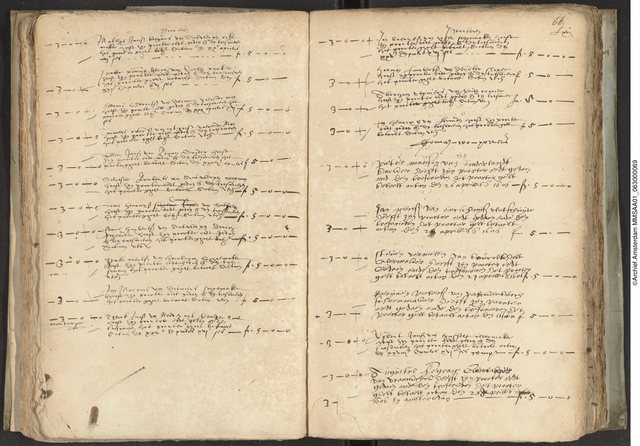
Poorterboek Amsterdam, 25 april 1606: inschrijving van Abraham Verniers als kramer, afkomstig uit Emden — bron: Archief Amsterdam
Twee jaar later, op 12 mei 1608, laat hij zich in Leiden opnieuw inschrijven als poorter — dit keer als distillateur, met als borgen Maerten Willemsz. en Pieter Arentsz. (Erfgoed Leiden en Omstreken).
Uit het Rechterlijk Archief van Leiderdorp — een register van transporten (inventarisnummer 10, lopend van 9 april 1611 tot en met 5 augustus 1613, getranscribeerd door H. J. van der Waag) — blijkt dat Abraham in die jaren een stuk land bezat buiten de Zijlpoort te Leiden. Hij wordt in dit register tweemaal genoemd: eenmaal onder de verbasterde naam Abraham Warnier, en eenmaal onder zijn eigen naam Abraham Verniers.
De eerste vermelding, akte nr. 246 (folio 174v., gedateerd 17 september 1612), is een schuldbrief van zijn buurman Daniel Aelbertsz. tafellakenwerker, wonende te Leiden, waarin Abrahams land als grens wordt genoemd. De volledige archieftekst luidt:
"Daniel Aelbertsz. tafellakenwerker wonende Leiden is schuldig aan Jan Pietersz. Sanguin gardenier poorter van Leiden de somme van f 12 losrente met hijpotheek op ½ hond warmoesland buiten de Zijlpoort, belend ten N: Abraham Warnier, ten O: de erfgenamen van Lambert Jacobsz. warmoesman, ten Z: de weduwe en erfgenamen van Willem Cornelisz. de Milde en ten W: de gemene vaarsloot. Dit wegens koop."
De tweede vermelding, akte nr. 291 (folio 210, gedateerd 25 maart 1613), is de akte waarin Abraham zelf — op dat moment woonachtig in Haarlem — via een notaris in Leiden zijn stuk land verkoopt. De volledige archieftekst luidt:
"Jacob Jansz. Verweij notaris te Leiden met procuratie van Abraham Verniers distillateur wonende Haarlem verkoopt aan Claes Jansz. bakker wonende Leiden ½ hond land buiten de Zijlpoort, belend ten N: Jan Pietersz. Sanguin, ten O: de erfgenamen van Lambert Jacobsz. warmoesman, ten Z: Daniel Aelbersz. tafellakenwerker en ten W: de gemene vaarsloot. Prijs f 170."
Deze twee aktes samen geven een mooi, concreet beeld: Abraham bezat een stuk warmoesland (½ hond, ongeveer een achtste hectare) buiten de Zijlpoort in Leiden, grenzend aan de erfgenamen van Lambert Jacobsz. warmoesman, aan Jan Pietersz. Sanguin en aan Daniel Aelbertsz. tafellakenwerker. Op het moment van de verkoop, in maart 1613, woonde hij zelf al niet meer in Leiden, maar in Haarlem — hij liet de verkoop bij volmacht via een Leidse notaris regelen. Na dit spoor in Haarlem valt Abraham echter een lange tijd stil in de archieven: pas jaren later duikt hij weer op, dit keer in Enkhuizen. Wat hij in die tussenliggende periode heeft gedaan, waar hij heeft gewoond en gewerkt — dat is op dit moment volledig onbekend. Het is een hiaat van meerdere jaren dat nog altijd om verder onderzoek vraagt.
Leermeester der Groote Zeevaart
In Enkhuizen duikt Abraham op met de titel Mr. voor zijn naam — zoals bijna alle mannelijke Verniers in die tijd — en met een indrukwekkende functie: leermeester der groote zeevaart, oftewel navigatie-instructeur, in een tijd waarin de VOC net was opgericht en de behoefte aan goed opgeleide stuurlieden enorm was.
Op 17 september 1621 legde Mr. Abraham Verniers, samen met Jacob Ysbrantsz. Bontekoe (mogelijk een broer van de bekende zeevaarder Willem Ysbrantsz. Bontekoe), een verklaring af voor een Amsterdamse notaris, op verzoek van Jan Hendrick Jarichsz., ontvanger-generaal ter Admiraliteit van Dokkum. Het ging om een geschil binnen de Kamer van de VOC in Amsterdam over de wetenschappelijke onderbouwing van een nieuwe navigatiemethode ("'t Gesicht des grooten Zevaarts"), uitgevonden door Jan Hendrick Jarichs van der Leij. De volledige, oorspronkelijke tekst van deze verklaring luidt:
"Jacob Ysbrantsz. Bontekoe en mr. Abraham Verniers, leermeester der groote zeevaart te Enkhuizen, verklaren ten verzoeke van Jan Hendrick Jarichsz., ontvanger-generaal ter Admiraliteit van Dokkum, dat sy, getuygen, op gisteren, wesende den 16en September, geweest sijn in de vergaderinge van de Camer der Compagnie van Oost-Indiën binnen deser stede Amsterdamme, omme aldaer haer onpertydige gevoelen ende verclaringe te doen over 't fondament van de generale regel van 't Gesicht des grooten Zevaarts, gein'venteert by den producent, twelck hen, getuygen, door dispuyt van Cornelis Jansz., leermeester van de voors. Compagnie, tegen den voors. ontfanger, producent, belet wert te doen, nyet-tegenstaende de gemelte ontfanger tot verscheyden maelen vermaende ende versochte, dat d' voorn. Cornelis Jansz. met hem wilde uuytstaen, soo heeft Cornelis Jansz. daer nyet op geantwoort van toestemminge. Ende alsoo d' voors. ontfanger, producent, hen, getuygen, gevoele by regel van geschrifte versochte, soo hebben sy, getuygen, sulcx nyet connen weygeren."
In gewoon Nederlands: Abraham en Bontekoe werden gevraagd als onpartijdige deskundigen hun oordeel te geven over een nieuwe navigatiemethode, maar werden daarin gedwarsboomd door een dispuut met Cornelis Jansz., de eigen leermeester van de VOC, die weigerde om er inhoudelijk op in te gaan. Uiteindelijk gaven zij hun oordeel alsnog schriftelijk, zoals gevraagd. Deze verklaring is gepubliceerd als nr. 716 in de Rijks Geschiedkundige Publicatiën, met bronvermelding "Not. arch. 287 f. 213, Not. Fr. van Banchem" (RGP, 1621). In de personen- en plaatsnamenindex van dezelfde publicatie wordt hij vermeld als "Verniers, Abraham, zeevaartkundige", verwijzend naar dit nummer 716 (RGP-index) — een mooie bevestiging van zijn reputatie als man van de zeevaartkunde, passend bij zijn eerdere werk aan de Middelburgse Almanach met zijn astronomische en astrologische inhoud. Dat de VOC-kamer van Amsterdam zich juist tot hem wendde om een technisch dispuut over navigatiemethoden te beslechten, laat zien dat zijn gezag op dit terrein tot in de hoogste kringen van de jonge Compagnie reikte, op een moment dat goed onderricht in de zeevaartkunde van cruciaal belang was voor de handel op Oost-Indië.
Het beeld dat uit dit alles ontstaat, is dat van een man met een opmerkelijk veelzijdige loopbaan: kramer in Amsterdam, distillateur en poorter in Leiden, almanakschrijver van de Middelburgse Almanach voor 1603, en uiteindelijk in Enkhuizen tegelijk leermeester der groote zeevaart, weesmeester en weesvader. Van handelswaar tot navigatie-onderwijs, van drankstoken en kalenderrekenen tot het bestuur van een weeshuis — stuk voor stuk beroepen die vroegen om precisie, verantwoordelijkheid en het vertrouwen van de gemeenschap.
Huwelijk met Geertje Jans
Op 27 maart 1626 werd in Enkhuizen het huwelijk afgekondigd tussen Abram Vernier en Geertjen Jans. Het huwelijk zelf werd gesloten op 30 april 1626, in de Westerkerk te Enkhuizen, door predikant Frans Esausz. In deze huwelijksafkondiging wordt Abraham vermeld met als beroep "binnenvaer" en als adres "in het Oude Weeshuis" — een mooie bevestiging van zijn rol daar, want hij woonde er kennelijk zelf. In Enkhuizen droeg Abraham namelijk twee met elkaar samenhangende, maar verschillende functies: hij was weesmeester, regent van de Weeskamer en zodoende verantwoordelijk voor het toezicht op de boedels en financiën van wezen in de stad, én weesvader, het inwonende hoofd van het weeshuis zelf dat dagelijks voor de kinderen zorgde. Die combinatie van bestuurlijk toezicht en persoonlijke betrokkenheid past bij een man die, naast zijn vak als navigatie-instructeur, kennelijk ook het vertrouwen van de stad genoot. Geertjen Jans woonde aan de Keizerstraat te Enkhuizen. Beiden worden in dit kerkelijke register genoteerd als "Gereformeerd" (Westfries Archief).
Het echtpaar kreeg geen kinderen, en in de nalatenschap wordt Geertje aangewezen als Abrahams enige erfgenaam. Dit beeld wordt bevestigd door twee notariële archiefstukken uit Enkhuizen: archiefstuk 1 (No. 902 A 83, 1624), vermoedelijk rond zijn weesvaderschap, en archiefstuk 2 (No. 915 A 172), gedateerd op de dag van zijn overlijden. Het exacte verband tussen archiefstuk 1 en het latere huwelijk in 1626 wordt nog verder uitgezocht.
Het testament
Zijn testament, gepasseerd op 29 juni (vermoedelijk 1627, enkele maanden voor zijn dood) voor notaris Olbrant Smetius te Enkhuizen, bevestigt nog eens hetzelfde beeld: Abraham benoemt zijn vrouw Geertge Jans tot zijn enige en universele erfgename, met de gebruikelijke voorwaarde dat dit zou vervallen als zij vóór hem zou overlijden (Notarieel archief Enkhuizen). Getuigen waren Jan Jansz. en Gerrit Arijaensen.
Het originele handschrift is op plekken beschadigd en niet meer woord voor woord met zekerheid te lezen. Hieronder staat mijn zo volledig mogelijke reconstructie van de akte: waar het origineel goed leesbaar was, is de tekst letterlijk overgenomen; de onleesbare tussenliggende passages zijn aangevuld met de vaste formules die in testamenten van deze notaris en periode gebruikelijk waren. Dit is dus geen gecertificeerde transcriptie, maar de best mogelijke weergave op basis van wat nu beschikbaar is:
"In den naeme onses Heeren amen. Bij deze publijcke brieve van instrumente zij eenen igelijcken die dese kennelijck zullen zien oft hooren lesen, kennelijck ende openbaer, als dat in den jare onses Heeren ende Heylants Jesu Christi zestienhondert zevenentwintich, den XXIX junij, zijnde dinsdaechs 's morgens, present die getuygen hierna genoemt, is gecompareert voor mij, Olbrant Smetius, openbaer Notaris bij den Hove van Hollant geadmitteert, binnen der stede Enckhuysen residerende, ende de getuygen naerbeschreven, de eersame Abraham Verniers, burger deser stede Enckhuysen, gesont van lichame, gaende ende staende, zijn verstant, memorie ende vijf zinnen wel machtich ende gebruyckende, zoo uyterlijck aen mij, notaris, ende de getuygen wel bleeck; overdenckende de zekerheyt des doots ende de onzekere ure van dien, heeft hij testateur bij desen geinstitueert, geordonneert ende genomineert, gelijck hij institueert, ordonneert ende nomineert bij desen, tot sijn eenige ende universele erffgename Geertge Jans, sijn huysvrouwe, in ende tot alle de goederen, huys, gout, silver ende huysraet, hem testateur competerende ende die hij metter doot sal comen te ontruymen ende achterlaten, egeen uytgesondert, sulcx eeuwelijck ende erffelijck te aenveerden ende te behouden: mits conditie ende voorwaerde nochtans, in gevalle Geertge Jans, sijn voors. huysvrouwe, quaeme voor hem testateur uyt deser werelt te overlijden, dat alsdan dit tegenwoordich testament ende dispositie sal casseren ende te niete gaen, ende gans geenen effecte off cracht sorteren. Alle 'twelck voorschreven is, verclaerde hij testateur te wesen sijn uytersten laetsten wille, willende ende begerende dat 'tselve naer sijn overlijden effect sal sorteren, 'tzij als testament, codicille, gifte ter sake des doots, ofte in alsulcken anderen vuegen als 'tselve best naer rechten sal mogen bestaen ende subsisteren, niettegenstaende eenige ordonnantien, placcaten, costuymen ofte keuren, deser stede ofte van elders, dese jegenstrijdich. Aldus gedaen ende gepasseert ten huyse van mij, notaris, ter presentie van Jan Jansz. ende Gerrit Arijaensen, beyde als getuygen van gelove hiertoe versocht ende gebeden. [Ondertekend:] Olbrant Smetius, notaris — Abraham Verniers."
Curieus genoeg staat er, los van de akte zelf, ook nog een jaartal "1631" genoteerd — mogelijk een latere aantekening bij het openen of raadplegen van het testament. Dat vraagt nog nader onderzoek, net als de vraag welk verband archiefstuk 1 (No. 902 A 83, 1624) precies heeft met het latere huwelijk in 1626.
Abraham Verniers (born around 1573, died 5 November 1627) was the son of stamvader Laurens Verniers, and one of the more colourful figures among the early generations of the family. According to the National Archives, his origin probably lies in Ghent or Antwerp — exactly where he was born is not known with certainty.
A caveat here: this origin is difficult to reconcile with what is known of his father. Laurens was, after all, already banished in absentia from Antwerp in 1567 — so he was no longer living there by that point. If Abraham was born around 1573, this cannot have been in Antwerp while Laurens himself had already left it, unless the family lived apart for a time: Laurens was demonstrably itinerant (Franeker, Kleve, possibly Antwerp and 's-Hertogenbosch), while his wife Grietge Joosten may already have moved north earlier, with (part of) the family. I therefore treat "Ghent or Antwerp" for now as a plausible, but not watertight, indication of origin.
The family was fleeing the Spanish Inquisition. Abraham probably travelled via Middelburg, which lies close to Flanders, Ghent and Antwerp, and on from there to Emden. Emden was a safe haven for Mennonites: after the fall of Antwerp (1585) and the violence of the Inquisition, very many Mennonite refugee families ended up there — as, according to the later Amsterdam and Leiden burgher registers, Abraham himself also did. That "the family came from Emden" is thus a recurring detail in the sources, but I treat it for now as a hypothesis: it is quite possible that Emden was, for Abraham, a stop along the way, not an actual birthplace or place of origin. Unfortunately a great deal of archival material from Emden itself was lost during the Second World War in the Allied bombing of the city, so his traces at this stopover are scarce.
What is certain: in 1603 he wrote, in Middelburg, his well-known Middelburg Almanach, which only came to light again centuries later through a chance find in a seventeenth-century book binding. There may be a connection with a group of almanac-writers named Verniers who lived in Ghent and presumably had their almanacs printed in Antwerp — a separate Hidden Story on this will follow later.
Middelburg was no random place to try one's luck at the time. The town had a history as a wine-trading city going back to the thirteenth century, and enjoyed a heyday in this trade long before the VOC: as a central location in the Scheldt region, Middelburg grew into an important staple market for wine, chiefly from south-western France (among other things via the trade route with La Rochelle, well documented in notarial deeds from the period 1423-1585), supplemented by wine merchants from Germany, England, Scotland, Portugal, Spain, Genoa and Lombardy. Rhine wine, French wines, the sweet Malmsey and Romanée, and Bastard wine from the Mediterranean changed hands there (Zeeland Archives). For a man like Abraham — later a distiller, pedlar and skilled in navigation — that was probably not an unfamiliar environment: in a town that ran on the wine trade, drink and shipping, there was enough work to be found for someone with his skills.
From Emden, or on the way there, he also travelled to the Republic. In the Amsterdam burgher register he is recorded on 25 April 1606 as a pedlar, originating from Emden (Amsterdam Archives).
Amsterdam Burgher Register, 25 April 1606: registration of Abraham Verniers as a pedlar, originating from Emden — source: Amsterdam Archives
Two years later, on 12 May 1608, he had himself registered again as a burgher in Leiden — this time as a distiller, with Maerten Willemsz. and Pieter Arentsz. as sureties (Erfgoed Leiden en Omstreken).
The Judicial Archive of Leiderdorp — a register of property transfers (inventory number 10, running from 9 April 1611 to 5 August 1613, transcribed by H. J. van der Waag) — shows that Abraham owned a piece of land outside the Zijlpoort at Leiden during those years. He is mentioned twice in this register: once under the corrupted name Abraham Warnier, and once under his own name Abraham Verniers.
The first mention, deed no. 246 (folio 174v., dated 17 September 1612), is a bond issued by his neighbour Daniel Aelbertsz. tafellakenwerker (linen-weaver), resident of Leiden, in which Abraham's land is named as a boundary. The full archival text reads (original, left untranslated as a primary source):
"Daniel Aelbertsz. tafellakenwerker wonende Leiden is schuldig aan Jan Pietersz. Sanguin gardenier poorter van Leiden de somme van f 12 losrente met hijpotheek op ½ hond warmoesland buiten de Zijlpoort, belend ten N: Abraham Warnier, ten O: de erfgenamen van Lambert Jacobsz. warmoesman, ten Z: de weduwe en erfgenamen van Willem Cornelisz. de Milde en ten W: de gemene vaarsloot. Dit wegens koop."
The second mention, deed no. 291 (folio 210, dated 25 March 1613), is the deed in which Abraham himself — by then living in Haarlem — sells his piece of land via a notary in Leiden. The full archival text reads (original, left untranslated):
"Jacob Jansz. Verweij notaris te Leiden met procuratie van Abraham Verniers distillateur wonende Haarlem verkoopt aan Claes Jansz. bakker wonende Leiden ½ hond land buiten de Zijlpoort, belend ten N: Jan Pietersz. Sanguin, ten O: de erfgenamen van Lambert Jacobsz. warmoesman, ten Z: Daniel Aelbersz. tafellakenwerker en ten W: de gemene vaarsloot. Prijs f 170."
These two deeds together give a nice, concrete picture: Abraham owned a plot of kitchen-garden land (½ hond, roughly an eighth of a hectare) outside the Zijlpoort at Leiden, bordering the heirs of Lambert Jacobsz. warmoesman (market gardener), Jan Pietersz. Sanguin, and Daniel Aelbertsz. tafellakenwerker. At the time of the sale, in March 1613, he himself was no longer living in Leiden but in Haarlem — he had the sale arranged by proxy through a Leiden notary. After this trace in Haarlem, however, Abraham falls silent in the archives for a long time: only years later does he resurface, this time in Enkhuizen. What he did in the intervening period, where he lived and worked — that is at present completely unknown. It is a gap of several years that still calls for further research.
Instructor of the Great Navigation
In Enkhuizen, Abraham appears with the title Mr. before his name — as almost all male Verniers did at the time — and with an impressive role: leermeester der groote zeevaart, that is, an instructor in navigation, at a time when the VOC had just been founded and the need for well-trained mates was enormous.
On 17 September 1621, Mr. Abraham Verniers, together with Jacob Ysbrantsz. Bontekoe (possibly a brother of the well-known seafarer Willem Ysbrantsz. Bontekoe), made a statement before an Amsterdam notary, at the request of Jan Hendrick Jarichsz., receiver-general to the Admiralty of Dokkum. It concerned a dispute within the Amsterdam Chamber of the VOC over the scientific basis of a new navigation method ("'t Gesicht des grooten Zevaarts"), invented by Jan Hendrick Jarichs van der Leij. The full, original text of this statement reads (original, left untranslated as a primary source):
"Jacob Ysbrantsz. Bontekoe en mr. Abraham Verniers, leermeester der groote zeevaart te Enkhuizen, verklaren ten verzoeke van Jan Hendrick Jarichsz., ontvanger-generaal ter Admiraliteit van Dokkum, dat sy, getuygen, op gisteren, wesende den 16en September, geweest sijn in de vergaderinge van de Camer der Compagnie van Oost-Indiën binnen deser stede Amsterdamme, omme aldaer haer onpertydige gevoelen ende verclaringe te doen over 't fondament van de generale regel van 't Gesicht des grooten Zevaarts, gein'venteert by den producent, twelck hen, getuygen, door dispuyt van Cornelis Jansz., leermeester van de voors. Compagnie, tegen den voors. ontfanger, producent, belet wert te doen, nyet-tegenstaende de gemelte ontfanger tot verscheyden maelen vermaende ende versochte, dat d' voorn. Cornelis Jansz. met hem wilde uuytstaen, soo heeft Cornelis Jansz. daer nyet op geantwoort van toestemminge. Ende alsoo d' voors. ontfanger, producent, hen, getuygen, gevoele by regel van geschrifte versochte, soo hebben sy, getuygen, sulcx nyet connen weygeren."
In plain English: Abraham and Bontekoe were asked as impartial experts to give their opinion on a new navigation method, but were thwarted in this by a dispute with Cornelis Jansz., the VOC's own instructor, who refused to engage with the substance. In the end they gave their judgment in writing anyway, as requested. This statement was published as no. 716 in the Rijks Geschiedkundige Publicatiën, with the source reference "Not. arch. 287 f. 213, Not. Fr. van Banchem" (RGP, 1621). In the index of persons and place names of the same publication he is listed as "Verniers, Abraham, zeevaartkundige" (navigation expert), referring to this number 716 (RGP-index) — a nice confirmation of his reputation in the field of navigation, fitting with his earlier work on the Middelburg Almanach with its astronomical and astrological content. That the VOC Chamber of Amsterdam turned specifically to him to settle a technical dispute over navigation methods shows that his authority in this field reached into the highest circles of the young Company, at a time when sound instruction in navigation was of crucial importance for trade with the East Indies.
The picture that emerges from all this is that of a man with a remarkably varied career: pedlar in Amsterdam, distiller and burgher in Leiden, almanac writer of the Middelburg Almanach for 1603, and finally in Enkhuizen simultaneously instructor of the great navigation, weesmeester (orphan-master) and weesvader (orphanage father). From trading goods to teaching navigation, from distilling and calendar reckoning to running an orphanage — occupations that each demanded precision, responsibility and the trust of the community.
Marriage to Geertje Jans
On 27 March 1626 the marriage between Abram Vernier and Geertjen Jans was announced in Enkhuizen. The marriage itself was concluded on 30 April 1626, in the Westerkerk at Enkhuizen, by minister Frans Esausz. In this marriage announcement Abraham is recorded with the occupation "binnenvaer" (inland skipper) and the address "in het Oude Weeshuis" (in the Old Orphanage) — a fine confirmation of his role there, since he apparently lived there himself. In Enkhuizen, Abraham in fact held two related but distinct offices: he was weesmeester, a regent of the Orphan Chamber and thus responsible for overseeing the estates and finances of orphans in the town, and weesvader, the resident head of the orphanage itself who cared for the children on a daily basis. That combination of administrative oversight and personal involvement fits a man who, besides his trade as a navigation instructor, evidently also enjoyed the town's trust. Geertjen Jans lived on the Keizerstraat in Enkhuizen. Both are recorded in this church register as "Gereformeerd" (Reformed) (Westfries Archief).
The couple had no children, and in the estate Geertje is named as Abraham's sole heir. This picture is confirmed by two notarial records from Enkhuizen: document 1 (No. 902 A 83, 1624), probably related to his role as weesvader, and document 2 (No. 915 A 172), dated on the day of his death. The exact connection between document 1 and the later marriage in 1626 is still being investigated further.
The will
His will, executed on 29 June (probably 1627, a few months before his death) before notary Olbrant Smetius at Enkhuizen, confirms this same picture once again: Abraham names his wife Geertge Jans as his sole and universal heir, with the usual condition that this would lapse if she were to die before him (Notarial archive Enkhuizen). The witnesses were Jan Jansz. and Gerrit Arijaensen.
The original manuscript is damaged in places and can no longer be read word for word with certainty. Below is my most complete possible reconstruction of the deed: where the original was clearly legible, the text has been copied verbatim; the illegible passages in between have been filled in with the standard formulas customary in wills of this notary and period. This is therefore not a certified transcription, but the best possible rendering based on what is currently available (original text, left untranslated as a primary source):
"In den naeme onses Heeren amen. Bij deze publijcke brieve van instrumente zij eenen igelijcken die dese kennelijck zullen zien oft hooren lesen, kennelijck ende openbaer, als dat in den jare onses Heeren ende Heylants Jesu Christi zestienhondert zevenentwintich, den XXIX junij, zijnde dinsdaechs 's morgens, present die getuygen hierna genoemt, is gecompareert voor mij, Olbrant Smetius, openbaer Notaris bij den Hove van Hollant geadmitteert, binnen der stede Enckhuysen residerende, ende de getuygen naerbeschreven, de eersame Abraham Verniers, burger deser stede Enckhuysen, gesont van lichame, gaende ende staende, zijn verstant, memorie ende vijf zinnen wel machtich ende gebruyckende, zoo uyterlijck aen mij, notaris, ende de getuygen wel bleeck; overdenckende de zekerheyt des doots ende de onzekere ure van dien, heeft hij testateur bij desen geinstitueert, geordonneert ende genomineert, gelijck hij institueert, ordonneert ende nomineert bij desen, tot sijn eenige ende universele erffgename Geertge Jans, sijn huysvrouwe, in ende tot alle de goederen, huys, gout, silver ende huysraet, hem testateur competerende ende die hij metter doot sal comen te ontruymen ende achterlaten, egeen uytgesondert, sulcx eeuwelijck ende erffelijck te aenveerden ende te behouden: mits conditie ende voorwaerde nochtans, in gevalle Geertge Jans, sijn voors. huysvrouwe, quaeme voor hem testateur uyt deser werelt te overlijden, dat alsdan dit tegenwoordich testament ende dispositie sal casseren ende te niete gaen, ende gans geenen effecte off cracht sorteren. Alle 'twelck voorschreven is, verclaerde hij testateur te wesen sijn uytersten laetsten wille, willende ende begerende dat 'tselve naer sijn overlijden effect sal sorteren, 'tzij als testament, codicille, gifte ter sake des doots, ofte in alsulcken anderen vuegen als 'tselve best naer rechten sal mogen bestaen ende subsisteren, niettegenstaende eenige ordonnantien, placcaten, costuymen ofte keuren, deser stede ofte van elders, dese jegenstrijdich. Aldus gedaen ende gepasseert ten huyse van mij, notaris, ter presentie van Jan Jansz. ende Gerrit Arijaensen, beyde als getuygen van gelove hiertoe versocht ende gebeden. [Ondertekend:] Olbrant Smetius, notaris — Abraham Verniers."
Curiously, apart from the deed itself, a year "1631" is also noted — possibly a later annotation made when the will was opened or consulted. This still calls for further research, as does the question of exactly how document 1 (No. 902 A 83, 1624) relates to the later marriage in 1626.